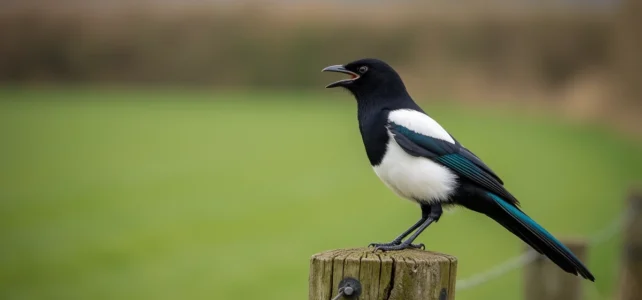
The Eurasian magpie (Pica pica) is one of those birds that everyone recognizes, but few people really listen to. Its hoarse and repetitive call punctuates the mornings in gardens, urban parks, and forest edges. Between alarm caws and more subtle vocalizations, the sound repertoire of this bird from the corvid family hides a complexity that bioacoustic research is beginning to document accurately.
Vocal repertoire of the Eurasian magpie: much more than just noise
The most well-known call of the magpie, this rapid and dry “tché-tché-tché,” serves as an alarm signal. An approaching cat, a bird of prey in flight, a too-curious human: the magpie warns. This call alerts not only its peers but also other bird species in the garden that benefit from this unwitting sentinel.
However, reducing the magpie to this single alarm call would be a mistake. About twenty types of vocalizations have been identified in Pica pica: begging calls from young birds, group coordination calls, courtship vocalizations, contact sounds between partners in a couple. This richness brings the magpie closer to the complexity observed in other corvids like the raven.
To better understand the meaning of the magpie’s call, one must consider the context: the same type of call can vary in intensity, rhythm, and duration depending on the perceived threat or social situation. The magpie adapts its vocalizations to its interlocutor, which implies a form of intentional communication that researchers continue to explore.
Thieving shiny objects: what the Exeter experience reveals
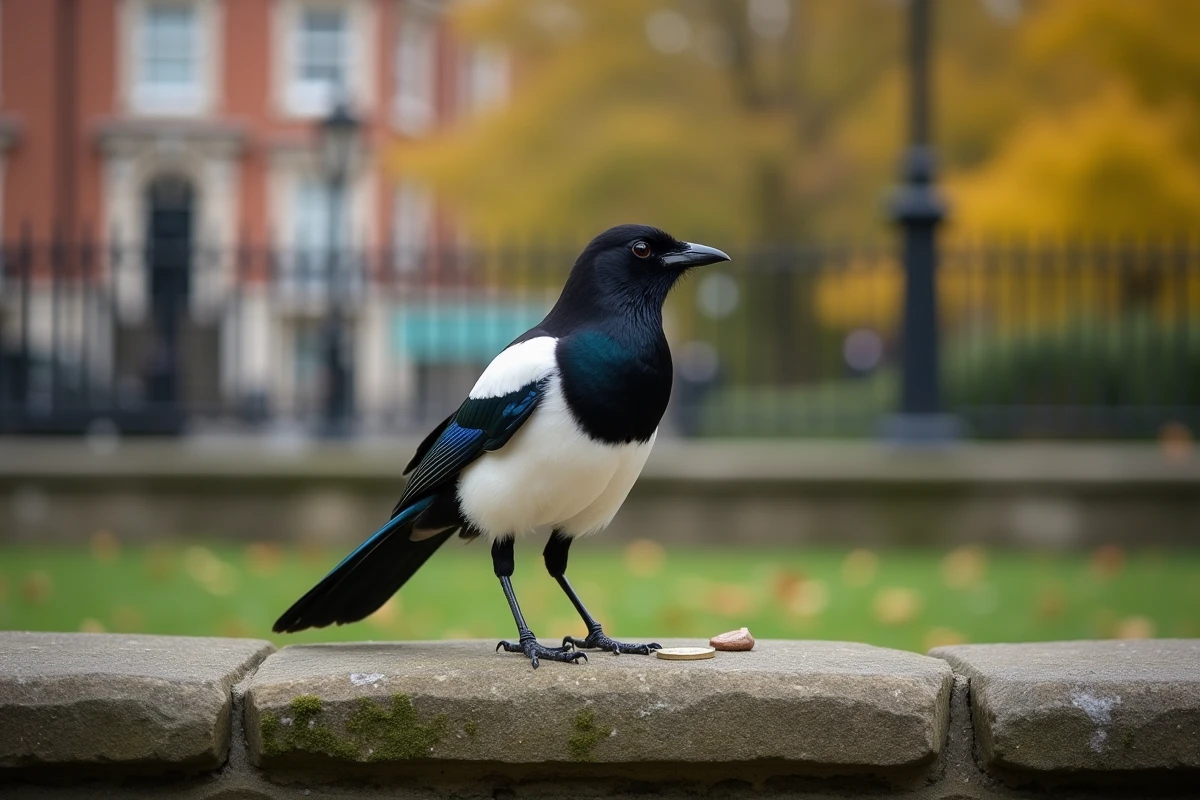
The image of the magpie stealing jewelry and coins to hide in its nest has crossed centuries. Rossini adapted it into an opera (La gazza ladra), and Hergé used it in The Castafiore Emerald. The myth is deeply rooted in European culture.
Research from the University of Exeter published in 2014 put this legend to the test. The protocol was simple: shiny metal objects were placed near accessible food for magpies. The result was surprising: magpies show active distrust towards very shiny objects, to the point of delaying or avoiding food intake nearby. The systematic attraction to glitter has not been confirmed.
So where does the reputation come from? Field observations shed light on this. The “thefts” of objects are often behaviors of play or curiosity, especially among magpies accustomed to human presence or hand-reared. A lightweight, manipulable object that can be grasped and moved attracts the magpie for its texture or novelty, not for its shine. The confusion between curiosity and kleptomania has fueled the rest.
A difficult observation bias to correct
A magpie carrying a piece of aluminum foil in a garden stands out. Ten great tits pecking at seeds go unnoticed. The size of the magpie, its presence in urban environments, and its visible behavior mark it as suspicious. This observation bias perpetuates the myth more surely than any evidence.
Predation on small birds: disproportionate accusations
The other major complaint against the magpie concerns nest predation. It does indeed eat eggs and nestlings, which leads to its classification among species likely to cause damage in parts of France.
The available data do not allow for a conclusion about a significant impact on small bird populations. Awareness campaigns led by nature protection associations in several European countries since the early 2020s emphasize this point: the actual impact of magpies on songbirds is low compared to habitat destruction and domestic cats.
- Predation by the magpie remains opportunistic and seasonal, concentrated during the spring breeding period.
- Domestic cats kill a number of small birds that far exceeds that attributed to corvids, according to field reports from ornithological associations.
- Destruction and fragmentation of habitats (hedges, groves, wastelands) deprive songbirds of protected nesting sites, a factor far more decisive than natural predation.
These campaigns have begun to produce effects: demands for systematic regulation of magpies are declining locally in some European countries, in favor of approaches focused on habitat restoration.
Intelligence and social life of Pica pica: an underestimated corvid
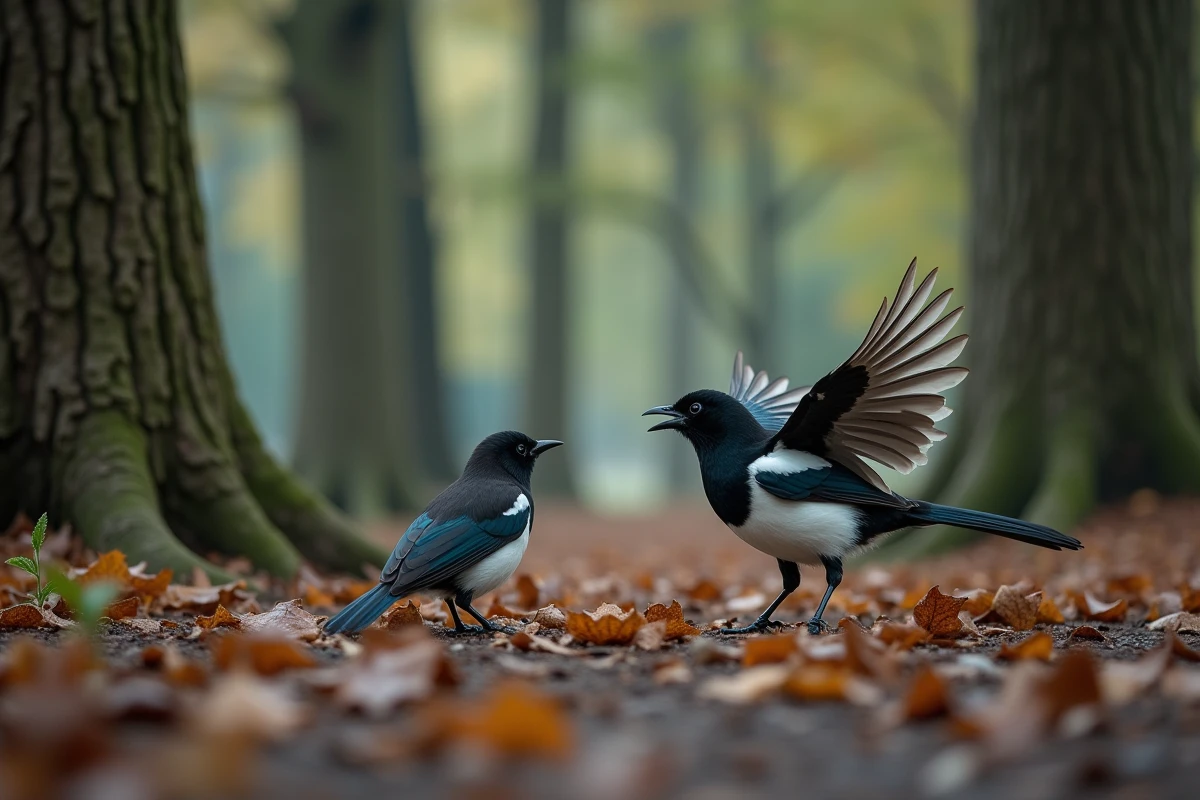
The magpie is part of the corvid group, a family of birds whose cognitive abilities have been documented for several decades. It is loyal to its partner, and the couple builds a nest each year from twigs, often at the top of a young tree, covered with a dome of branches, sometimes thorny, to protect the brood from predators.
Nest construction can take one to two months, an investment that reflects cooperative behavior within the couple. The brood typically consists of four to nine eggs, with an incubation period of sixteen to twenty-one days.
A sedentary bird adapted to cities
The Eurasian magpie is sedentary. It does not migrate and stays in the same territory all year round, which explains its constant presence in gardens and urban parks in France. This proximity to humans paradoxically fuels its bad reputation: the more visible an animal is, the more misdeeds are attributed to it.
Its diet is omnivorous and opportunistic. Insects, larvae, seeds, fruits, food waste: the magpie adapts to what its environment offers. This dietary plasticity, combined with its intelligence, explains why the species thrives in environments transformed by urbanization.
The negative image of the Eurasian magpie is based on beliefs that the available scientific data do not confirm. Neither a compulsive thief nor a fearsome predator, it remains a corvid whose vocal repertoire, cognitive abilities, and role in the urban ecosystem deserve more attention than suspicion.