
A dispute over a delivery delay rarely revolves around the delay itself. It centers on the lack of evidence, on a promised time slot that no one can confirm, on a recipient who claims to have received nothing while the driver has indeed unloaded at dock 4. Truck tracking, when it goes beyond simple GPS location, becomes a tool for resolving commercial conflicts even before they arise.
Enhanced delivery proof: the anti-dispute lever that traditional fleet tracking ignores
Most tracking solutions focus on the vehicle’s position. Position alone does not resolve any disputes. What settles a dispute is the combination of timestamped data at the precise moment of unloading: photo of the dock, door number, electronic signature, GPS coordinates associated with a timestamp.
We observe that a provider equipped with timestamped photo and GPS delivery proof can reduce disputes of the “package not received” type by about 40%. This principle is transferable to the transport of batches and pallets in B2B. When a customer contests the receipt of a pallet, the carrier opens the proof log, displays the photo of the dock with the time and coordinates, and the conflict is resolved in a matter of minutes.
Recent truck geolocation systems integrate this evidential layer directly into the onboard unit. The driver does not need an additional application: the capture is triggered upon opening the doors or prolonged stopping at a referenced delivery point.
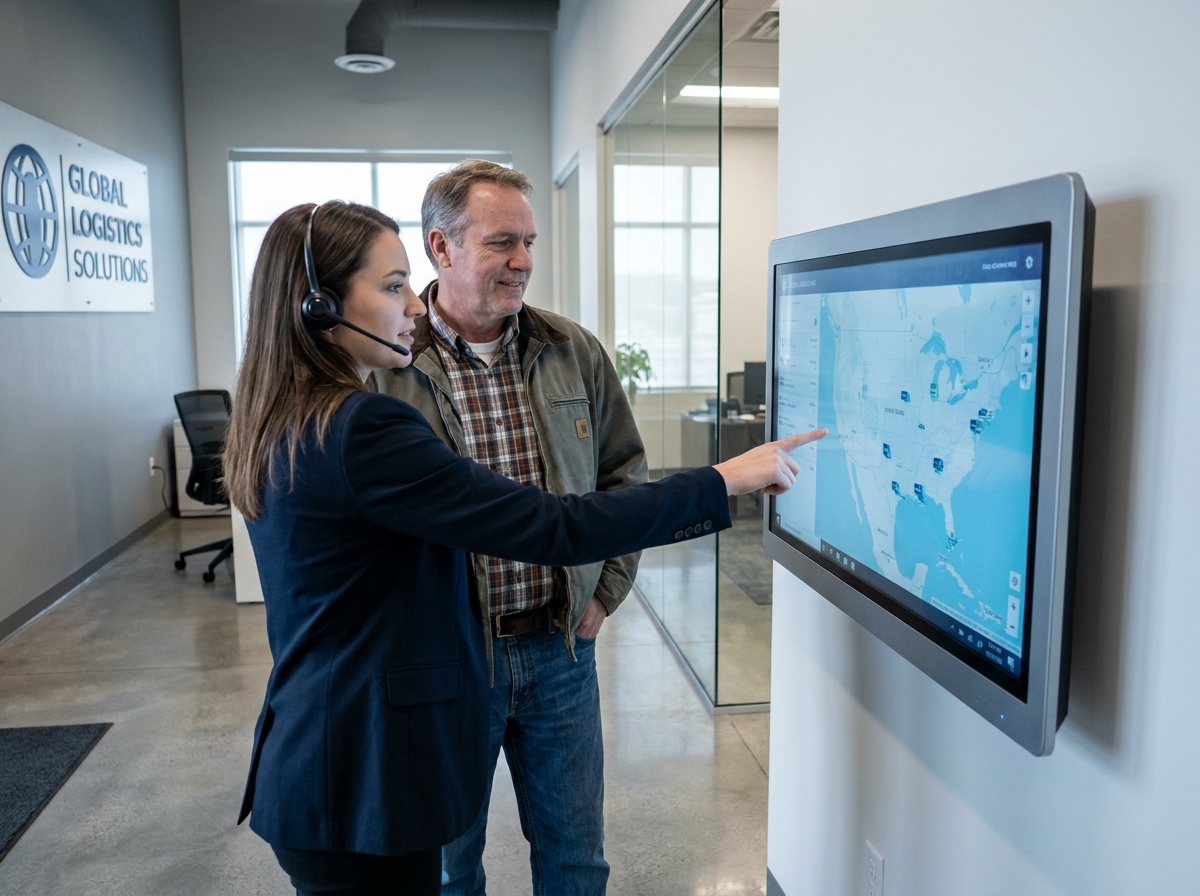
Gen2V2 smart tachograph and customer traceability
The widespread adoption of the second-generation smart tachograph (Gen2V2) between 2023 and 2026 changes the game for customer relations, not just for social compliance. This unit continuously records the vehicle’s position, driving times, stops, border crossings, all with certified timestamps.
In case of a dispute over a delivery time slot, the tachograph data serves as a quasi-legal logbook. The arrival time on site, the duration of parking, the departure time: everything is recorded and difficult to contest. For carriers working with demanding clients on late penalties, this certified data replaces the driver’s word with technical proof.
What the Gen2V2 brings beyond regulatory compliance
The smart tachograph is not limited to monitoring rest times. When coupled with a TMS, it feeds a punctuality history by client, by route, by day of the week. This type of data allows the transport company to document its actual performance and negotiate on factual bases during contract reviews.
A carrier that can demonstrate a high punctuality rate over six months of tachograph data has an argument that its competitor without traceability cannot produce. Managing conflicts with clients also involves the ability to objectify service quality.
Customer complaints in transport: anatomy of an avoidable conflict
Transport disputes follow repetitive patterns. Identifying them allows for configuring tracking to respond before the unhappy customer calls.
- Unreported delay: the truck is stuck but no one has informed the recipient. Real-time tracking with automatic alerts on ETA overruns eliminates this scenario. The customer receives a notification before even worrying.
- Contested delivery: the recipient claims to have received nothing or an incomplete quantity. Without enhanced delivery proof, the carrier absorbs the cost. With photo, signature, and GPS, customer service has a complete file in less than two minutes.
- Non-compliance with time slot: at logistics platforms, a truck outside its time slot may be turned away. Timestamped geolocation data proves the actual arrival time and allows distinguishing between a carrier delay and a waiting time imposed by the site.
- Damage related to transport conditions: temperature and shock sensors, coupled with GPS tracking, document transport conditions throughout the journey. In case of a claim for damaged goods, the sensor log identifies the exact moment and location of the incident.
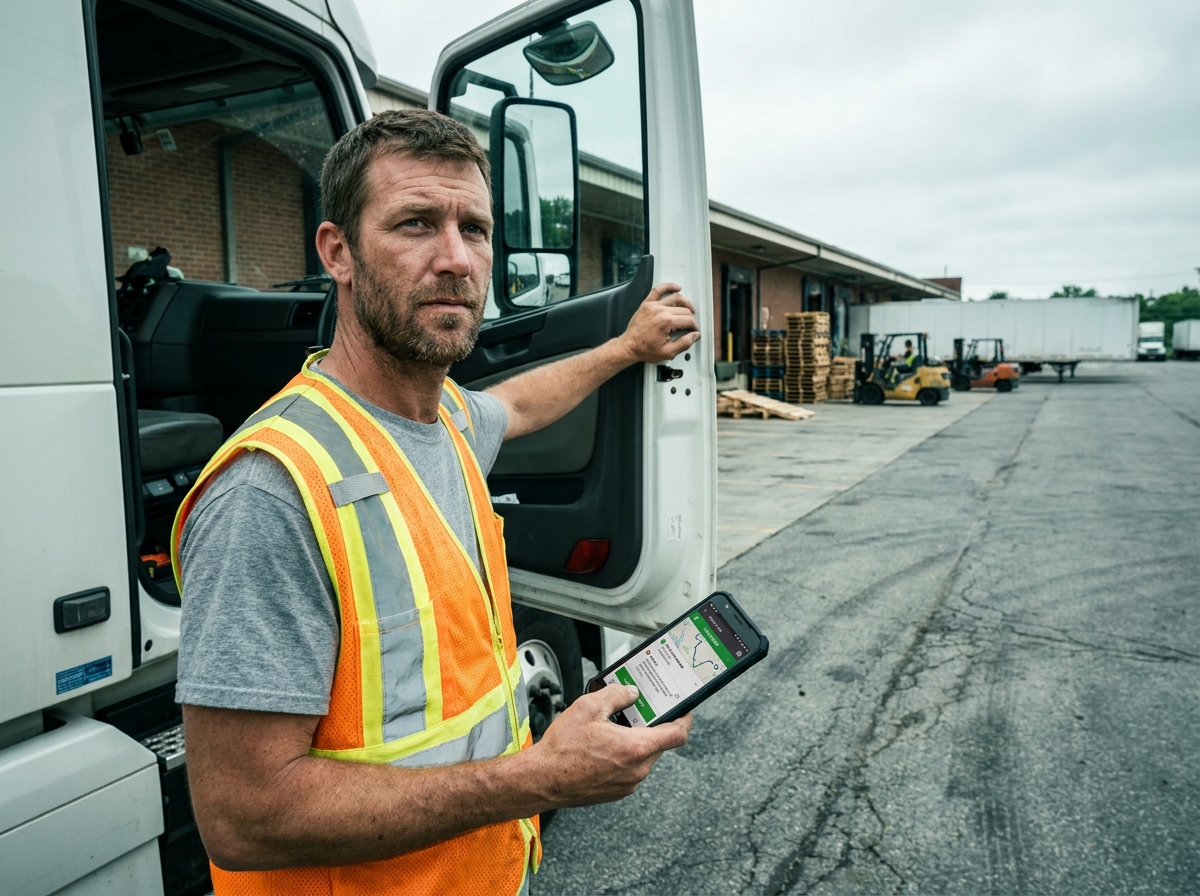
Fleet tracking and customer relations: configuring the system for proof, not just for dispatching
The majority of transport companies configure their tracking tools to optimize routes and monitor consumption. We recommend adding a proof-oriented layer and customer communication.
Proactive alerts to the recipient
Set up automatic notifications (SMS or email) to the recipient when the truck enters a defined radius around the delivery point. This feature reduces incoming calls to customer service and gives the recipient a sense of control over their deliveries. The number of “where is my truck” calls significantly decreases within the first few weeks.
Structured archiving of delivery proofs
Each delivery should generate a digital file that can be consulted during the contractual claim period. This file includes the GPS position upon arrival, the photo, the signature, and the departure time. When a customer service team can find a file in just a few clicks, the processing time for a claim goes from several days to a few hours.
Punctuality dashboard by client
Aggregate tracking data to produce a punctuality indicator by recipient. This dashboard becomes a dialogue tool during quarterly reviews. It also helps identify sites where waiting times at unloading degrade punctuality on subsequent deliveries, and discuss it with the client based on objective data.
Truck tracking is not just a dispatching or driver monitoring tool. Configured for proof and communication, it transforms each delivery into a documented file. Conflicts with clients do not all disappear, but those based on a lack of information or proof become resolvable in minutes instead of several tense exchanges.