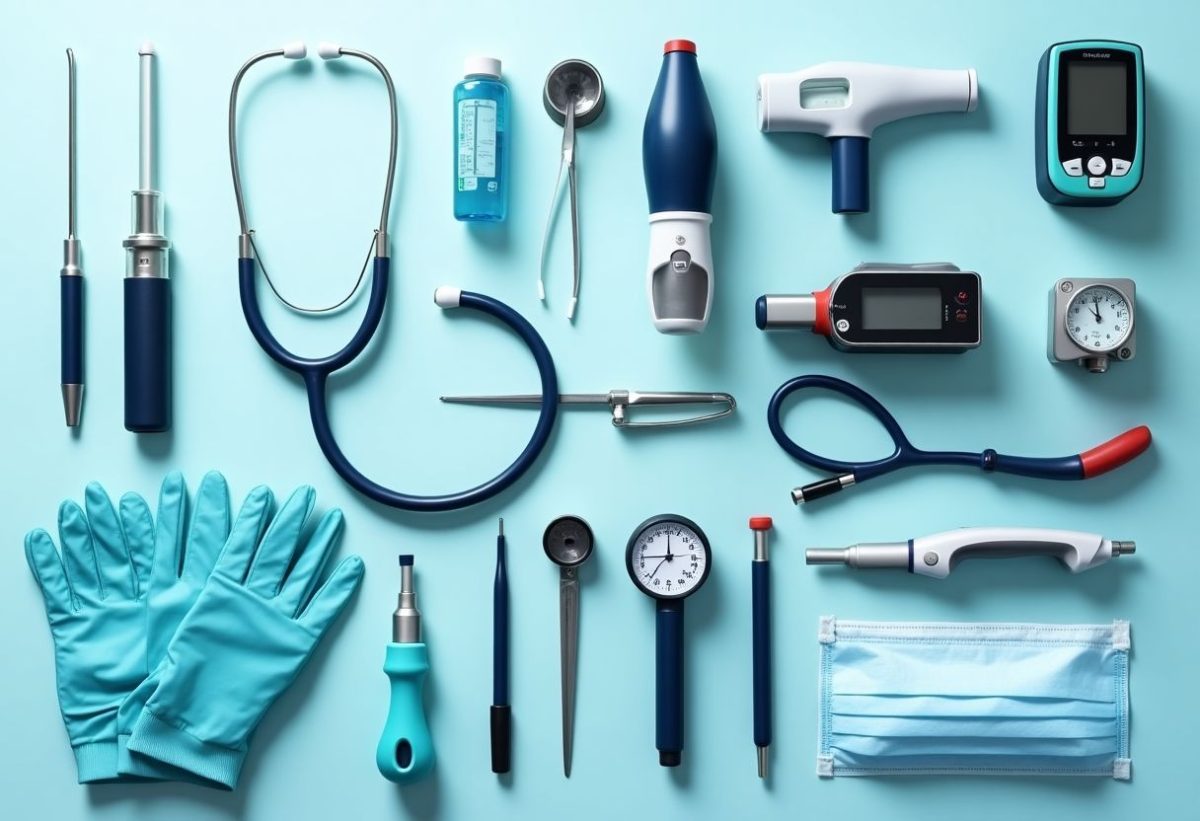
The nursing equipment, essential in the daily lives of healthcare professionals, embodies the marriage of efficiency and technology. It significantly contributes to the quality of services provided to patients. It also symbolizes the constant evolution of medical technologies, aimed at improving the comfort and safety of patients and caregivers.
Particular attention is given to safety and hygiene standards to ensure an optimal care environment.
The basic instruments: unchanging and indispensable
The basic instruments form the foundation of any nurse’s kit. These tools, although simple, are of paramount importance in daily care.
- Sphygmomanometers: Essential for measuring blood pressure, these devices come in manual and electronic models, each having its followers depending on clinical situations.
- Stethoscope: An iconic instrument for caregivers, it allows for the auscultation of internal body sounds, thus facilitating the diagnosis of multiple conditions.
- Thermometer: This small tool is crucial for monitoring body temperature, a key indicator of a patient’s health status.
- Dissecting forceps: Used to delicately manipulate tissues during care, it is an essential element in precision interventions.
Diagnostic equipment: precision and reliability
The accuracy of diagnoses largely depends on the quality of the equipment used. Modern and reliable equipment ensures better patient care.
The nursing diagnostic equipment also includes specialized devices for more specific examinations.
Among them are glucometers for measuring blood glucose levels, crucial for diabetes management.
Diagnostic lamps, on the other hand, are used for meticulous observation of skin and mucous tissues.
Otoscope, essential tools for ENT examinations, allow for precise inspection of the ear canals and eardrums.
These instruments, constantly evolving, are designed to provide practitioners with increased precision in evaluating and monitoring pathologies.
Safety equipment: protection and hygiene
The safety of patients and caregivers is an absolute priority. Safety equipment plays a crucial role in preventing infections and accidents.
Among this equipment, medical gloves provide an effective barrier against pathogens.
Surgical masks protect both healthcare personnel and patients from airborne contamination.
Gowns and overgowns, for their part, offer protection against splashes of bodily fluids.
Finally, protective glasses and face shields complete this arsenal to ensure a safe working environment.
This equipment is constantly improving, with materials becoming increasingly resistant and comfortable, to meet the growing demands for health safety.
Technological advancements: towards a new era of care
Technology plays an increasingly prominent role in the development of nursing equipment, bringing innovations that transform care practices.
- Multifunction monitors allow for continuous and real-time monitoring of vital parameters, facilitating quick decision-making.
- Portable devices such as pulse oximeters offer increased mobility, allowing for precise measurements even on the go.
- Telemedicine systems enable remote monitoring of patients, promoting access to care for those living in isolated areas.
- Assistance and intervention robots are beginning to appear in hospitals, opening new perspectives for surgical and daily care.