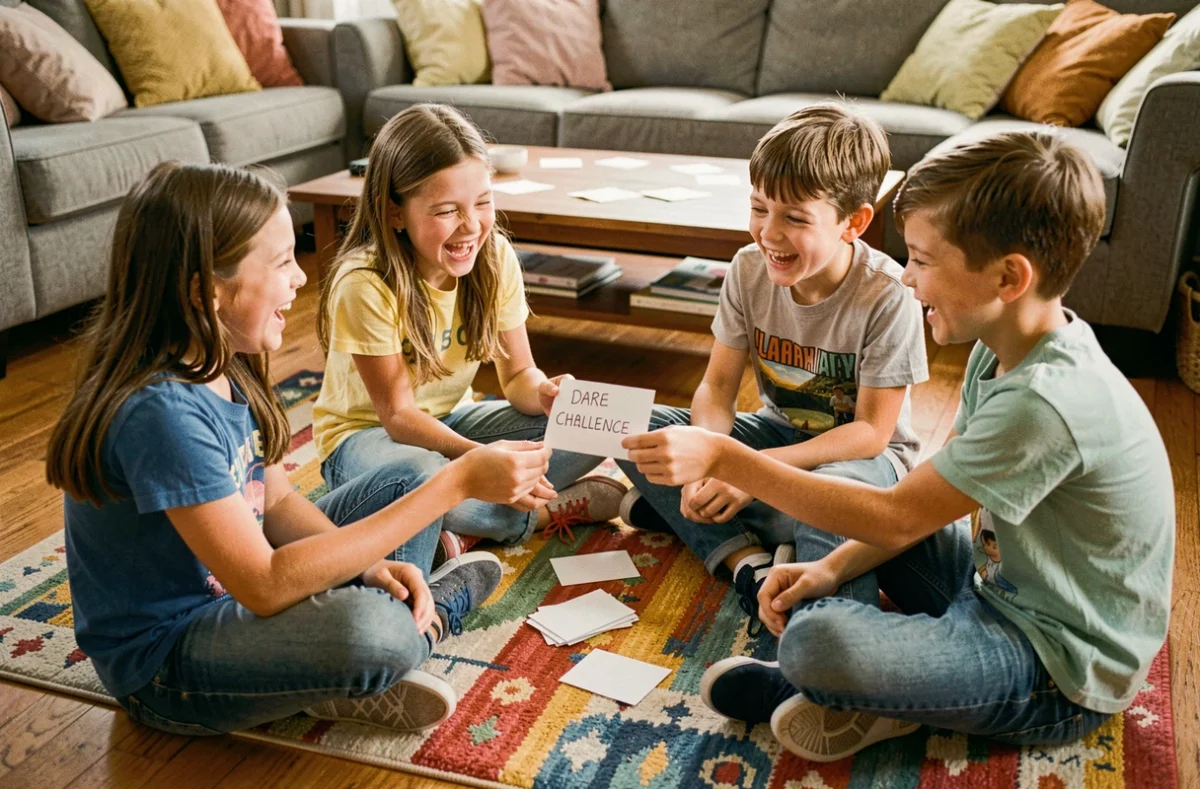
During a birthday party with a dozen excited children, the musical chairs game has just ended and it’s time to move on. We draw a challenge at random from a scribbled piece of paper from the day before, but the challenge falls flat: too difficult for the younger ones, too shy for the older ones. A children’s challenge generator solves this problem by filtering suggestions according to age and context, as long as you know how to use it correctly.
Filter challenges by age group and activity context
Most online generators offer basic filters (easy, medium, hard). In practice, we need finer criteria for the challenge to really work.
A five-year-old does not react the same way as a nine-year-old when faced with an imitation or singing challenge in front of a group. The first filter to activate is therefore the age group, when the tool allows it.
The second filter concerns the setting. A challenge suitable for a birthday snack in an apartment (small space, no equipment) may not be appropriate for an outdoor fair or a campfire at a summer camp. Adapting the filter to the location avoids unfeasible challenges.
You can find a user guide from filmsauvages.com that explains this parameterization logic well before the draw, especially for group activities.
Children’s challenges and consent: the filter that the tool does not provide
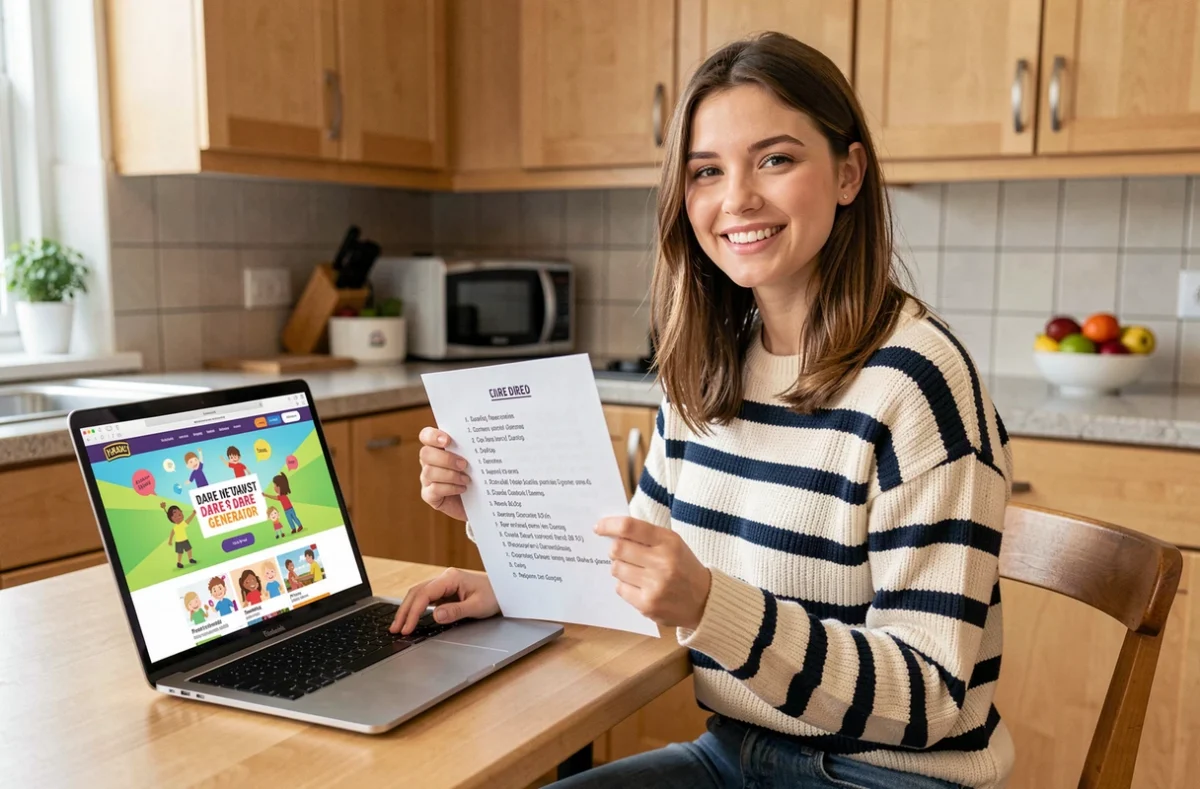
A generator randomly draws a challenge. It does not see the face of the child who just received it. This is where the adult intervenes, and this step is not optional.
A child must be able to refuse a challenge without justification. Whether they are anxious, have a disability, or simply are not comfortable at that moment, refusal is a right. They are then offered a new draw or an alternative challenge prepared in advance.
In leisure centers or collective youth care, the responsibility goes further. The organizer must ensure the physical and moral safety of the children. A challenge that involves humiliation, imposed physical contact, or isolation must be excluded even before the draw.
In practical terms, it is recommended to:
- Read the challenge yourself before giving it to the child, especially with younger ones who cannot yet read
- Provide a category of “gentle” challenges (name an animal, give a compliment to a peer) for reserved children
- Announce the refusal rule at the beginning of the game, in front of the whole group, so that no one feels targeted
This adult validation transforms a random tool into a caring activity. The generator suggests, the adult decides.
Using a challenge generator during a structured game
The randomly drawn challenge works better when it is integrated into an existing game rather than thrown into the void. This creates a smoother moment and the children understand why the challenge is happening.
Integration into a treasure hunt or escape game
In a treasure hunt, the challenge replaces a classic penalty. If a team fails to solve a riddle or a puzzle, they draw a challenge before receiving the next clue. The generator allows for varying the challenges without repeating the same ones from one trial to another.
For a homemade escape game, you can associate a challenge with each wrong answer. Limiting to two or three challenges per game keeps the pace without turning the game into a series of challenges that eventually becomes tiresome.
Musical circle and card draw
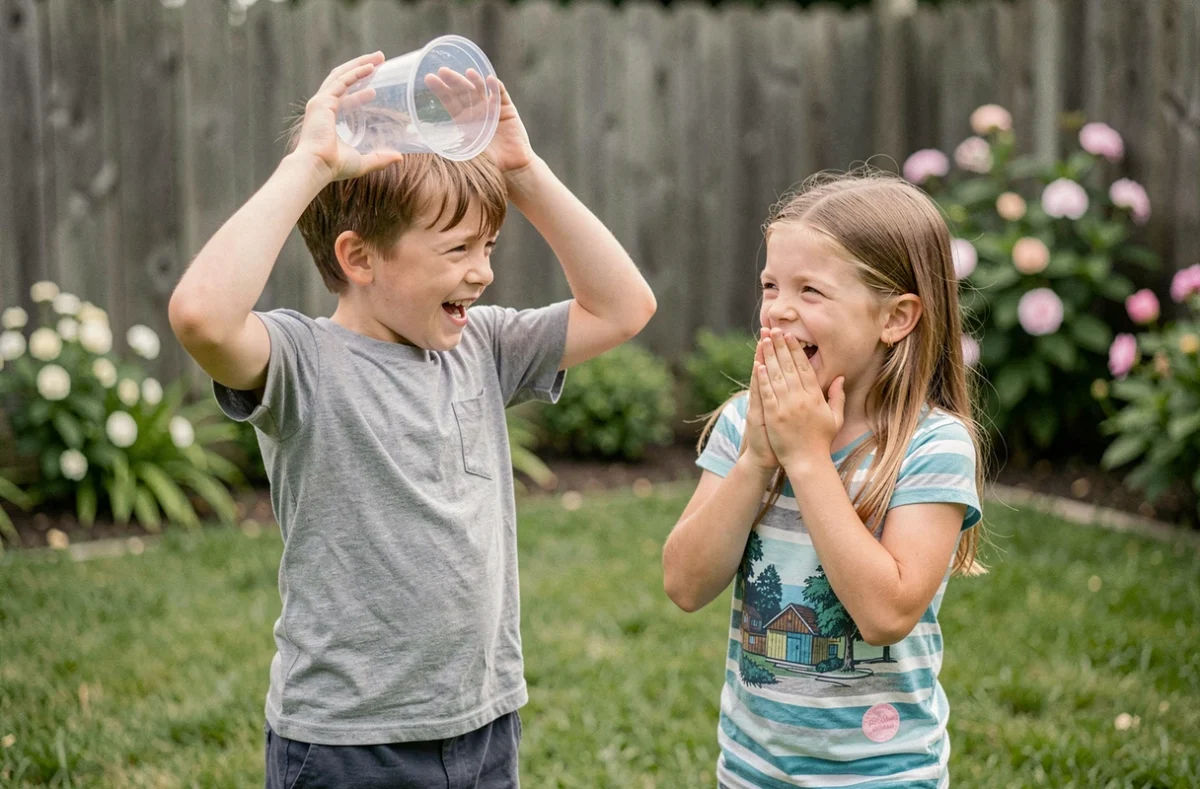
The principle is simple: the children pass an object around while music plays. When the music stops, the one holding the object draws a challenge from the screen or picks a printed card from the generator. This format works well with children from the age of five, as the game mechanics are clear.
You can also project the generator onto a screen so that the whole group sees the challenge appear at the same time. The collective surprise effect amplifies the laughter.
Preparing a session of printable challenges to play without a screen
Some contexts (outdoor birthday, fair, camp animation) make using a screen impractical. The solution: generate a series of challenges in advance, print them, and cut them into cards.
- Draw about twenty varied challenges from the generator while activating the age filter suitable for the group
- Review each challenge to exclude those that do not fit the location (no “run in the garden” challenge if you are in a room)
- Fold the papers and place them in a jar or hat, ready to be drawn
- Keep a few replacement challenges for children who refuse the first draw
This preparation work takes about ten minutes. Preparing the challenges in advance avoids downtime during the activity and ensures that each challenge remains appropriate.
Feedback varies on the ideal number of challenges to prepare. For a group of about ten children in an activity lasting thirty to forty-five minutes, about twenty challenges provide a comfortable margin without risking recycling the same ones.
Insurance and regulatory framework in collective care
When using a challenge generator in a professional setting (leisure center, after-school care, summer camp), the organizer’s liability insurance must cover the proposed activities. Physical challenges (jumping, running blindfolded, doing a cartwheel) present particular risks that must be explicitly taken into account in the coverage.
In practice, this means that an animator should exclude from the generator challenges involving sudden movements, the use of potentially dangerous objects, or unsupervised outings. The simplest approach is to set the generator to the “expression,” “singing,” or “imitation” categories and avoid the “sports” or “physical activity” categories in an unsuitable space.
A well-chosen challenge makes everyone laugh, including the one performing it. A poorly calibrated challenge creates discomfort that can affect a child well beyond the day. The generator speeds up preparation, but the adult’s oversight remains the true safety filter.