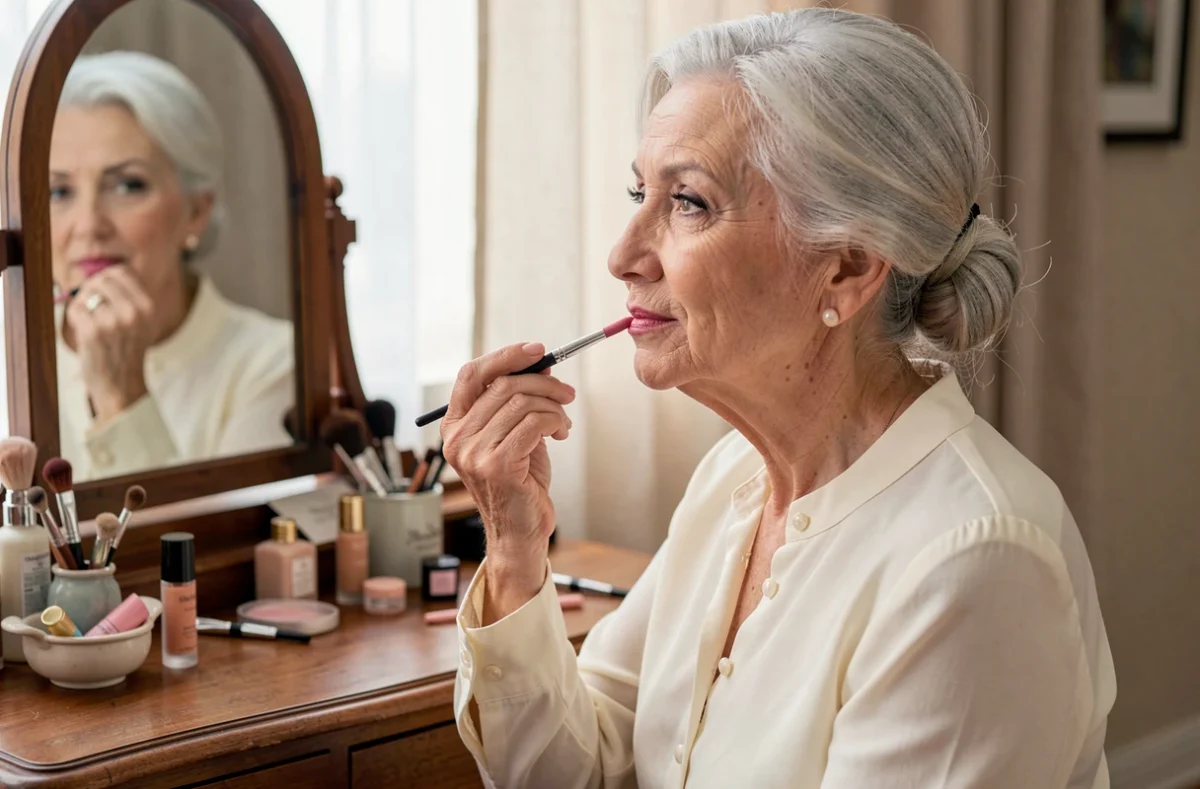
The texture of a lipstick matters more than its shade when the lips have lost volume and natural hydration. After 70, the choice of a formula relies on specific technical criteria: compatibility with a weakened mucosa, behavior of the pigment in fine lines, and the product’s ability to stay put without drying out.
Irritating formulas to avoid: ingredients to watch for on the label
A lipstick that causes tingling or burning sensations is not a sign of effectiveness. According to the American Academy of Dermatology, it is a signal of irritation that warrants immediate discontinuation of the product. If the lips do not heal after two to three weeks, a dermatological consultation is necessary.
We recommend systematically examining the INCI list before any purchase. The most common irritating agents in lipsticks often go unnoticed on the packaging.
- Camphor, menthol, and eucalyptus provide a cooling sensation but dry out the already sebum-depleted lip mucosa
- Synthetic fragrances and flavors (cinnamon, citrus, peppermint) are frequent triggers of allergic contact dermatitis
- Phenol and salicylic acid, present in some “plumping” formulas, irritate chapped lips instead of repairing them
As an alternative, we recommend formulas based on ceramides, shea butter, or dimethicone. Vaseline and mineral oil remain reliable care bases for prepping the lips before applying color.
Finding tips for choosing a lipstick at 70 suitable for one’s skin can further refine this selection according to one’s skin profile.
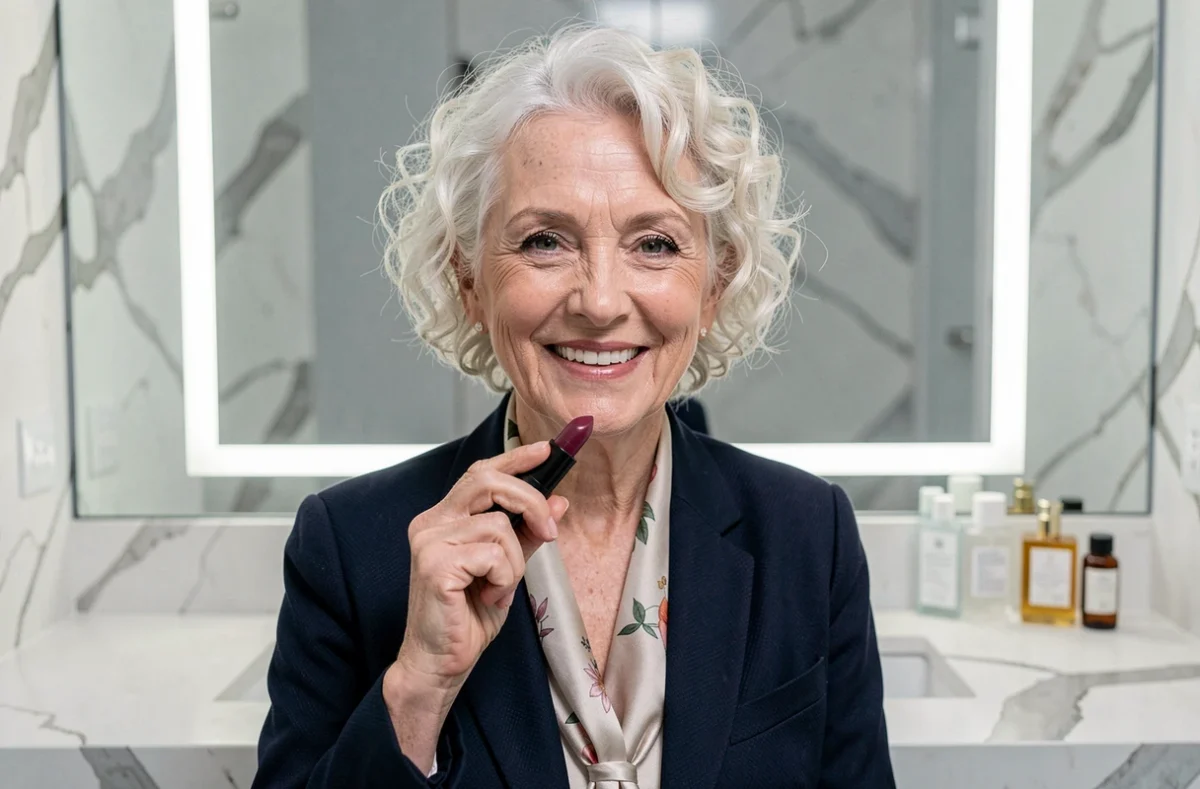
Cream versus long-lasting matte texture: what mature skin demands
Matte and long-lasting formulas pose a real problem for mature lips. Their rigid film accentuates every fine line and causes gradual drying with daily use. The apparent comfort of the first hours gives way to tightness, then to chapping if no intermediate rehydration is planned.
A cream or satin texture remains the safest choice after 70. These formulas glide over micro-reliefs instead of settling into them. Their flexible film moves with the mouth without cracking.
The lip pencil as a technical tool, not decorative
On a mouth whose contours have lost definition, the pencil serves as a physical barrier. It prevents the pigment from migrating into the perioral fine lines (the infamous “bleeding”). We observe that many women apply the pencil only on the outline, while the line benefits from covering the entire lip surface before color.
This underlayer of pencil creates a grip that enhances the wear of the cream texture without resorting to a drying formula. The result: a stable color without sacrificing hydration.
Sun protection for lips: the angle that makeup ignores
The lips do not produce enough melanin to protect themselves from UV rays. After 70, the thinned lip mucosa is particularly vulnerable to actinic damage. Dermatologists from the American Academy of Dermatology recommend a balm with SPF 30 or higher for every outing.
Mineral filters (zinc oxide, titanium dioxide) should be preferred on sensitive lips. Unlike chemical filters, they do not penetrate the mucosa and do not cause a burning sensation.
In practice, this SPF balm is applied as the first layer, under the pencil and lipstick. Waiting a minute for the film to set is enough to prevent the color from sliding. This step adds thirty seconds to the routine but protects an area that most facial sunscreens do not cover.
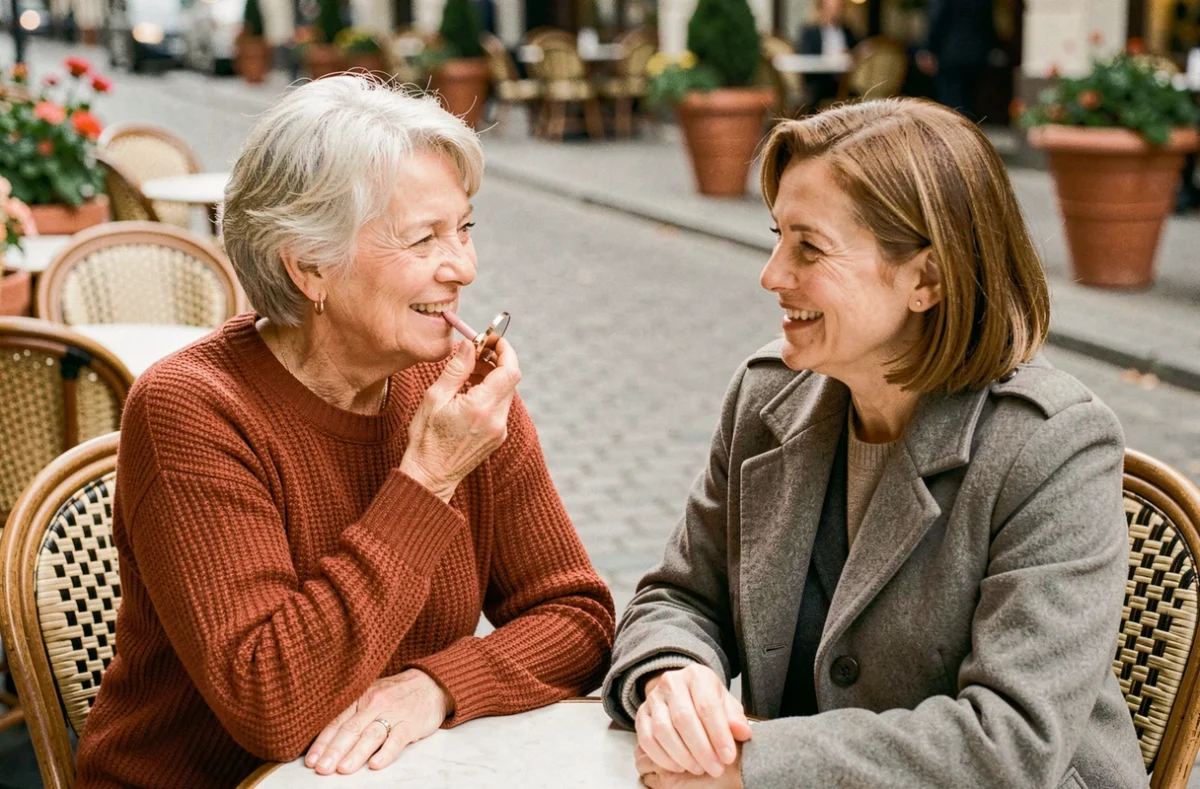
Colors that enhance the mature mouth: pigments and undertones
Burgundy and very dark shades are the first nuances to reconsider. Makeup artist Margina Davis confirms: these colors absorb light, visually reduce the volume of the lips, and accentuate the impression of sagging in the lower face.
Favor warm undertones
Coral-based reds, salmon pinks, and rosy nudes with peach undertones reflect light and give a natural volume effect. A slightly luminous lipstick enlarges the mouth where a dark matte retracts it.
For fair skin, a satin raspberry pink works better than a cool pink. On medium to dark skin, a brick red or warm plum avoids the pitfall of icy burgundy while adding intensity.
Test the color in the right place
We recommend testing the lipstick on the tip of the finger (not on the back of the hand). The skin there is thinner, closer to lip texture. The preview of the final result will be much more reliable than a swatch on the wrist, where the skin thickness distorts the perception of the pigment.
- Satin salmon pink: versatile, suitable for most light to medium skin tones
- Cream brick red: a warm alternative to classic red, less demanding on the outline
- Rosy nude with peach reflection: discreet but pigmented enough not to “disappear” on pale lips
- Warm satin plum: a rich option for dark skin without the hardening effect of cold burgundy
The choice of color does not negate the precautions regarding the formula. A perfumed salmon pink will irritate just as much as a matte burgundy. The shade comes after checking the composition, not before.