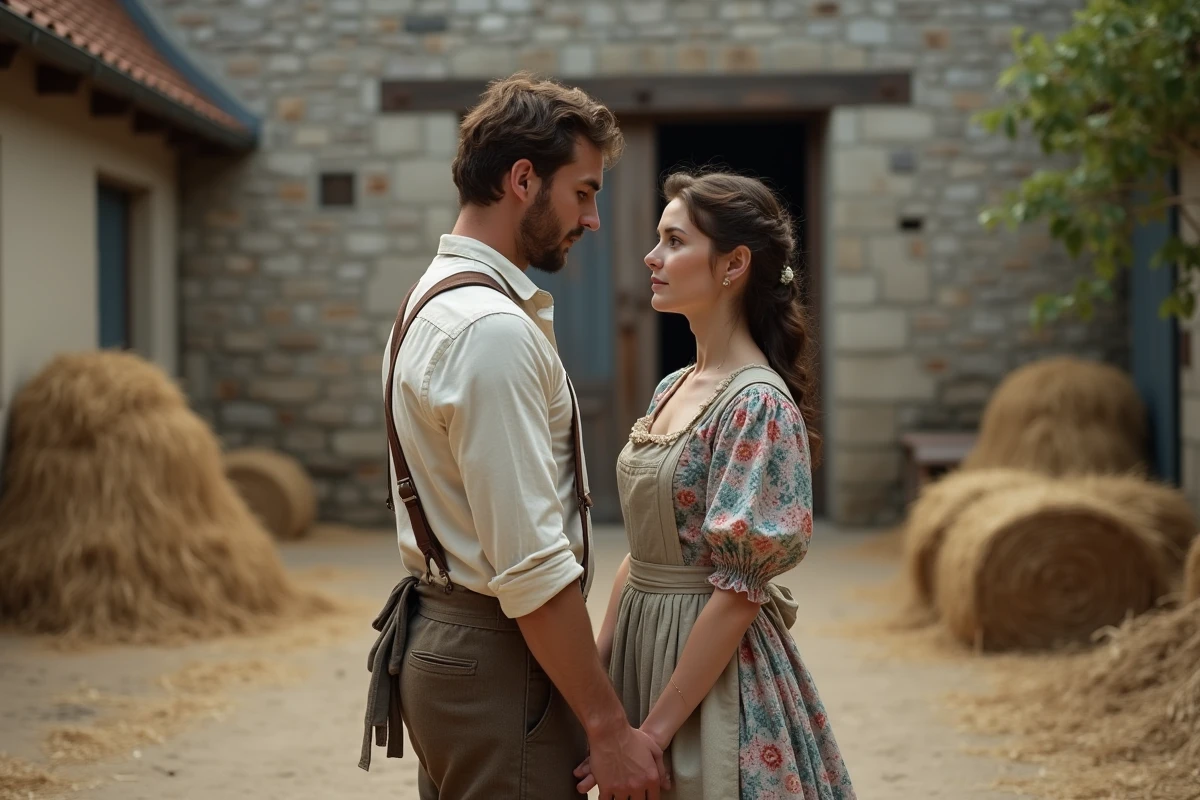
For centuries, peasant marriage in France functioned as a transaction between families. Lands, livestock, and tools were negotiated. Romantic feelings, when they existed, remained secondary to the imperatives of economic survival. The transformation towards a marriage based on personal attachment occurred slowly, in fits and starts, driven by changes that classic historical syntheses often associate with urban elites but which also traversed the countryside.
Agricultural wage labor and seasonal migrations: peasant marriage outside the village
Approaches focused on the Middle Ages or the 18th century describe a rural world where families closely controlled unions. Young people met within the parish, under the watchful eye of the priest and their parents. The choice of spouse followed a land-based logic: bringing two plots closer together, avoiding the dispersion of an estate.
Recent micro-historical research on rural Western Europe shows that agricultural wage labor and seasonal migrations in the 19th century cracked this model. Young men left to work on other farms, attended fairs, and entered domestic service far from their home commune. Young women also circulated more, notably as servants in neighboring towns.
These movements created opportunities for encounters that escaped family control. A day laborer could meet a tenant farmer’s daughter during a harvest in a neighboring district. To delve deeper into the history of love marriages among peasants, it is essential to measure how much geographical mobility preceded emotional mobility.
The village did not suddenly cease to exert social pressure. Charivaris (noisy protests against unions deemed inappropriate) still persisted at the end of the 19th century in some regions. However, the ability of young people to meet outside parental oversight gradually made these resistances less effective.
Popular press and serialized novels: an imported model of romantic love in the countryside
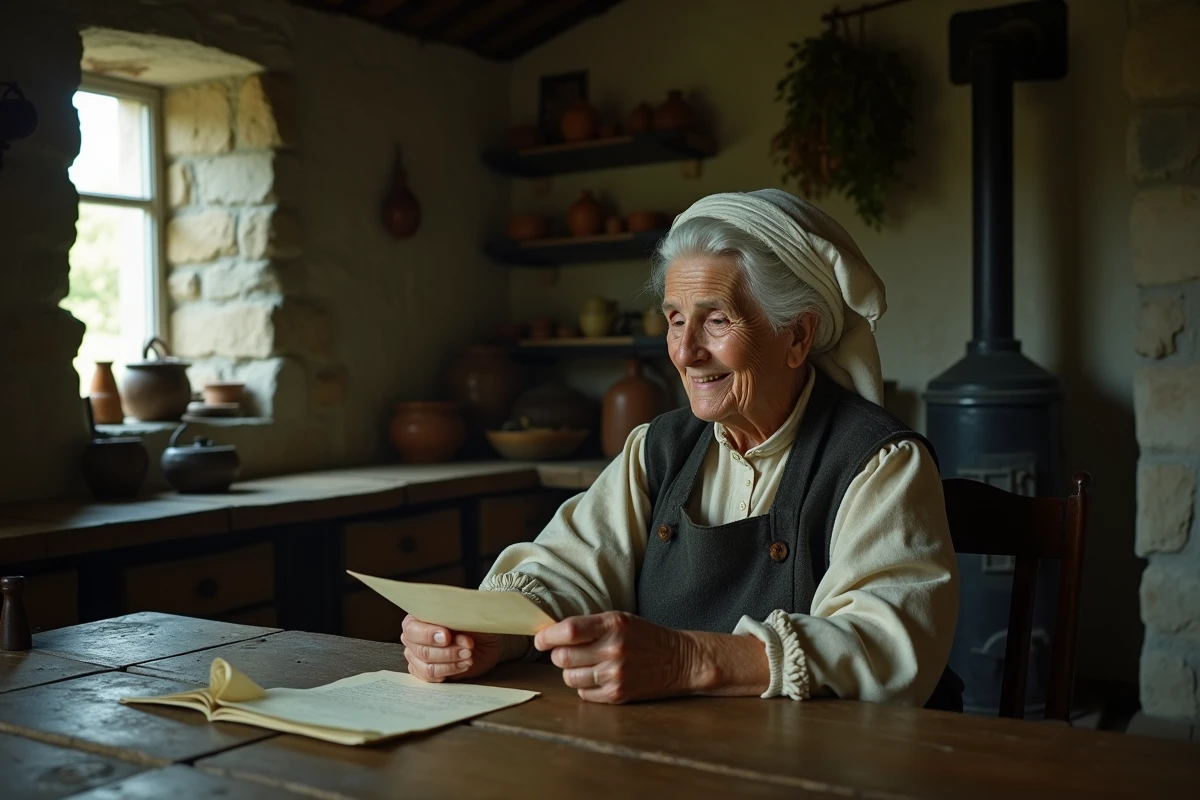
The second transformation is cultural. From the second half of the 19th century, the spread of popular press and serialized novels introduced representations of romantic love into the French countryside that had previously been reserved for urban settings.
Gender history studies published after 2010 highlight a specific phenomenon: rural schoolteachers, in their correspondence, testify to a growing gap between the sentimental models conveyed by reading and the family matrimonial strategies. The young peasant woman reading a serialized story in the local newspaper no longer viewed her future husband in the same way her mother did a generation earlier.
This tension did not always resolve in favor of sentiment. Families still had a powerful lever: the dowry and land. A father could threaten to disinherit a daughter who refused a favorable match. The Church, for its part, required the free consent of the spouses, but in practice, family pressure remained strong.
What serialized novels really changed
The serialized novel did not invent love among peasants. It provided a vocabulary and legitimacy to a feeling that already existed but was not valued by the village community. Saying “I love him/her” as a reason for marriage became acceptable, even desirable, because a cultural model made it expressible.
Declining land pressure and tolerance for inclination marriages in the 20th century
The third factor is demographic and economic. Studies of rural historical demography show that at the beginning of the 20th century, the decline in land pressure allowed for greater tolerance towards inclination marriages. Land fragmentation was already advanced, rural exodus was emptying the countryside: there was less to lose by allowing a son or daughter to marry whomever they pleased.
Notaries and priests of the time noted fewer systematic family oppositions than in the previous century. This observation nuances a widespread idea that the transition from arranged marriage to love marriage was late and abrupt. The reality seems more gradual:
- In the 19th century, seasonal mobility expanded the circle of possible encounters, but families retained an effective veto right over unions
- By the end of the 19th century, printed culture disseminated a romantic ideal that weakened the legitimacy of purely strategic marriage
- At the beginning of the 20th century, the reduction of land stakes diminished families’ economic motivation to impose a spouse
These three dynamics overlap without canceling each other out. In certain regions where land retained high value (vineyards, large grain farms), arranged marriages persisted well after World War I.
Consent of the spouses and the role of the Church in rural marriage
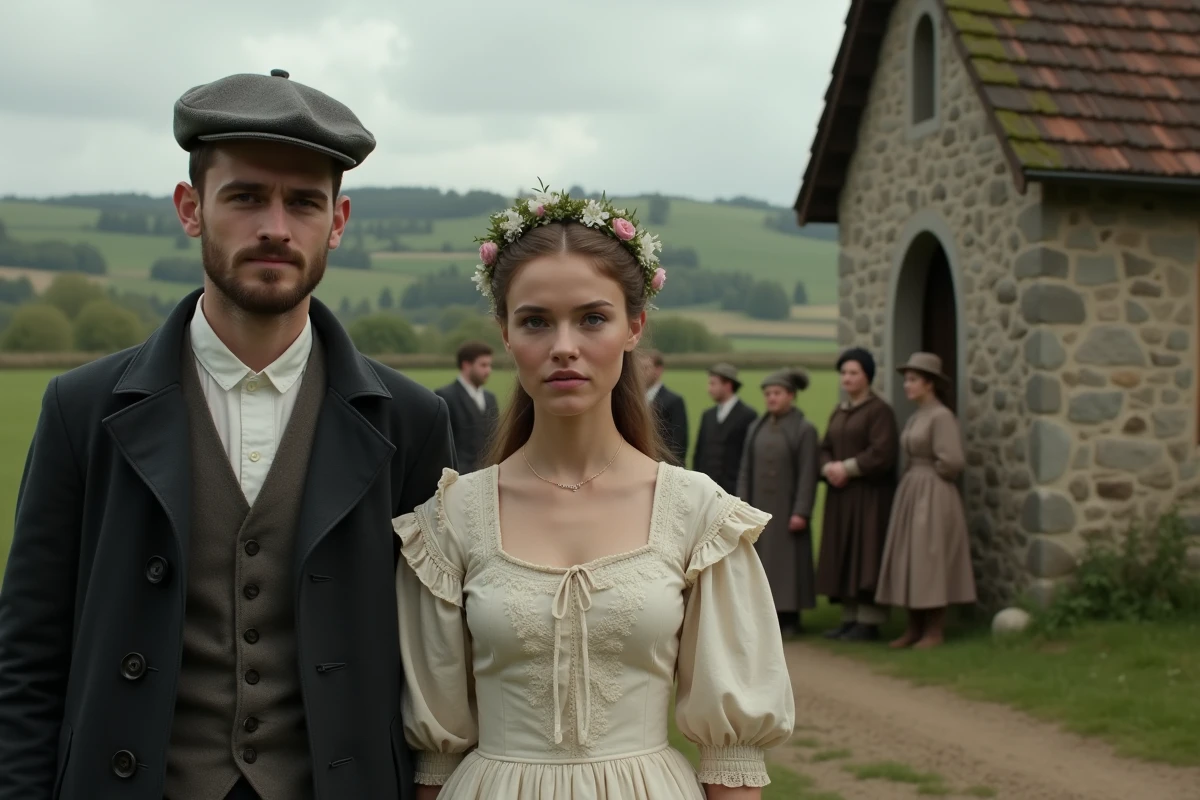
The Catholic Church played an ambiguous role in this transformation. Since the Council of Trent in the 16th century, doctrine required mutual and free consent from the spouses. In theory, a forced marriage was null. In practice, the line between coerced consent and free consent remained blurred in rural parishes.
The village priest knew the families. He was aware of which unions were desired by parents and which were a matter of personal choice. The available data do not allow us to conclude that the rural clergy systematically defended the freedom of choice of young people against family strategies. Depending on the parishes and the times, the priest could be an ally of lovers or a conduit for community pressure.
The Civil Code of 1804 established a legal framework that reinforced both paternal authority (mandatory parental consent for men under 25 and women under 21) and individual freedom (legal impossibility of physically forcing a marriage). This legal framework coexisted with highly variable family practices depending on the regions.
A shift without a precise date
Setting a date for the “triumph of love” in peasant marriage would be artificial. Field returns diverge on this point depending on the studied regions. What emerges is a gradual erosion of the arranged model, accelerated by mobility, printed culture, and land disengagement, rather than a dated sentimental revolution.
The majority of rural historians agree on one point: on the eve of World War II, love marriage had become the claimed norm in the French countryside, even if patrimonial arrangements persisted behind the scenes. Sentiment had not erased the economy, but it had become the reason one displayed, the one deemed worthy of being told.