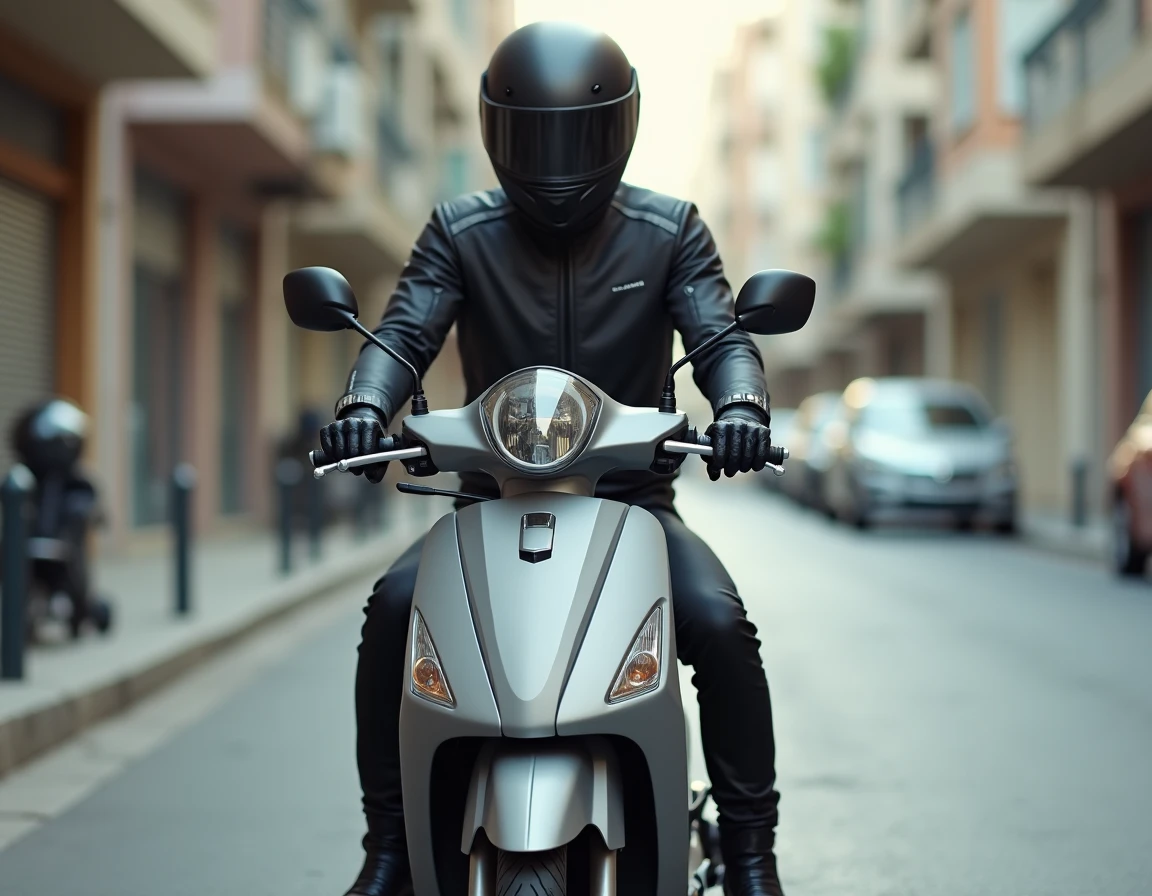
A new 125 scooter does not deliver its performance right out of the dealership. The break-in period affects the longevity of the engine, the quality of lubrication, and ultimately, the maximum speed that can be effectively utilized. Understanding this phase helps avoid premature wear and allows you to get the most out of your machine in the long run.
Metal particles and engine oil: what happens in the engine during break-in
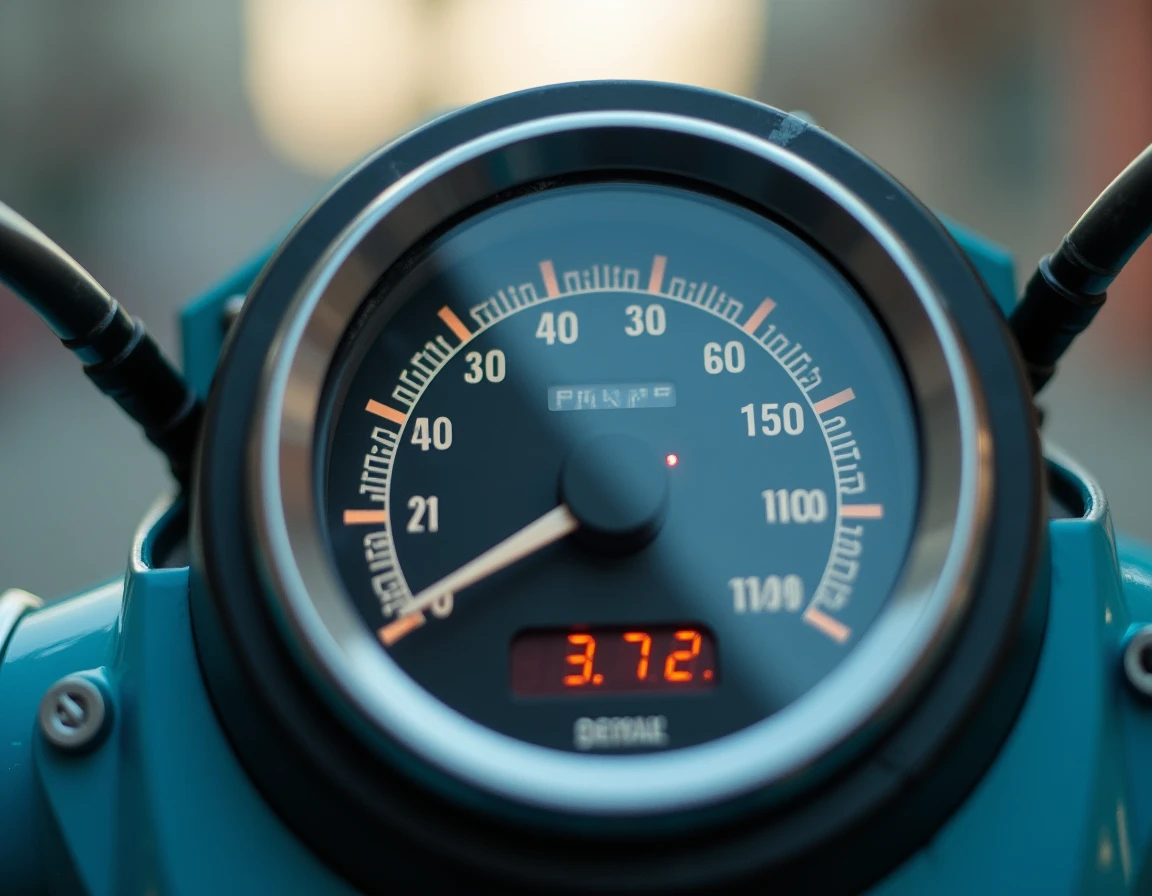
The break-in period is not just about riding gently. Inside the engine, the surfaces of new parts (piston rings, cylinder, crankshaft bearings) have micro-roughness that is eliminated through gradual friction. This process releases fine metal particles into the engine oil.
The oil quickly becomes laden with these residues, making it more viscous and less effective. This is why the end-of-break-in oil change is the most critical of the scooter’s entire life. Ignoring it means allowing an abrasive lubricant to circulate in an engine that has not yet reached its optimal surface condition.
Manufacturers generally set the break-in period for a 125 cc scooter at the first thousand kilometers. For a 50 cc, this distance is roughly halved. To properly understand the break-in and maximum speed of a 125 scooter, it is important to remember that these distances correspond to progressive stages, not a uniform constraint throughout the duration.
Engine speed stages on a 125 scooter: concrete limits by kilometer range

The staged break-in involves gradually increasing the allowed engine speed (or maximum speed, on automatic transmission models like CVT). The manufacturer’s maintenance manual details these stages, but the pattern remains similar from model to model.
- During the first hundred kilometers, speed is often limited to 75 km/h. The engine should not be pushed to full throttle, even briefly.
- Between a few hundred and halfway through the break-in distance, speed gradually increases to 80-90 km/h, varying the RPMs to promote even break-in of the parts.
- On the final stretch, speed can increase further, but prolonged full throttle is still discouraged until the end-of-break-in oil change.
A often overlooked point: varying the RPMs is as important as respecting the ceiling. Riding at a constant speed for dozens of kilometers on a highway prevents the piston rings from working across their entire range. Alternating moderate accelerations and phases of natural deceleration (engine braking) produces a better surface condition.
Actual maximum speed of a 125 scooter after break-in
Technical specifications announce theoretical maximum speeds, measured under ideal conditions: light rider, flat road, no wind. In real conditions, the usable cruising speed on the highway is significantly lower than this value.
Most thermal 125 cc scooters reach a maximum speed between 90 and 110 km/h depending on the model. This is sufficient for traveling on the highway at a reasonable pace, but leaves little margin for overtaking or merging onto the highway (where 125s are anyway limited to certain sections according to local regulations).
Factors that reduce usable maximum speed
The weight of the rider and any passenger directly impacts the maximum speed. A loaded top case alters aerodynamics. Altitude, headwinds, and ambient temperature also play a role. These parameters explain why two owners of the same model report different figures.
A well-conducted break-in does not guarantee a maximum speed higher than that announced by the manufacturer. However, a poor break-in can permanently limit engine performance, due to poorly adjusted segmentation that leads to a loss of compression and thus power.
Electric 125 scooter: mechanical break-in disappears, other precautions emerge
Electric 125 models (or equivalent 125s) do not have a cylinder, piston rings, or engine oil in the traditional sense. The mechanical break-in of the powertrain does not apply. Several manufacturers do not even provide any recommendations for initial speed limitations for the electric motor.
The concept of break-in then shifts to other components. Brake pads and tires always require a break-in period, regardless of the type of engine. On a new tire, the surface layer (release agents) reduces grip during the first few dozen kilometers. It is advisable to avoid hard braking and sharp lean angles until this layer has been worn away.
On the battery side, the first charge and discharge cycles deserve attention. Monitoring operating temperatures and checking electrical connections after a few hundred kilometers are part of the good practices recommended by some manufacturers.
End-of-break-in oil change and mechanical follow-up on a thermal 125
The oil change performed at the end of the break-in removes the metal particles accumulated in the oil. Delaying this operation means running the engine with degraded lubricant, which accelerates the wear of freshly broken-in parts.
- Adhere to the oil change distance indicated in the maintenance manual, without waiting for the next periodic maintenance.
- Use oil that meets the manufacturer’s specifications, not necessarily the most expensive, but the right viscosity and standard.
- Take advantage of this first oil change to check the tightness of the fastening elements (exhaust, engine mounts), as the vibrations from the first kilometers can loosen some nuts.
Some riders choose to have this oil change done at the dealership to maintain traceability of the maintenance. Field reports vary on this point: a competent independent workshop can perform the same operation, provided the invoice is kept.
The break-in period represents an investment of patience that translates into thousands of kilometers of gained reliability. Respecting the stages and performing the oil change on time remains the foundation of a 125 engine that retains its performance over time.