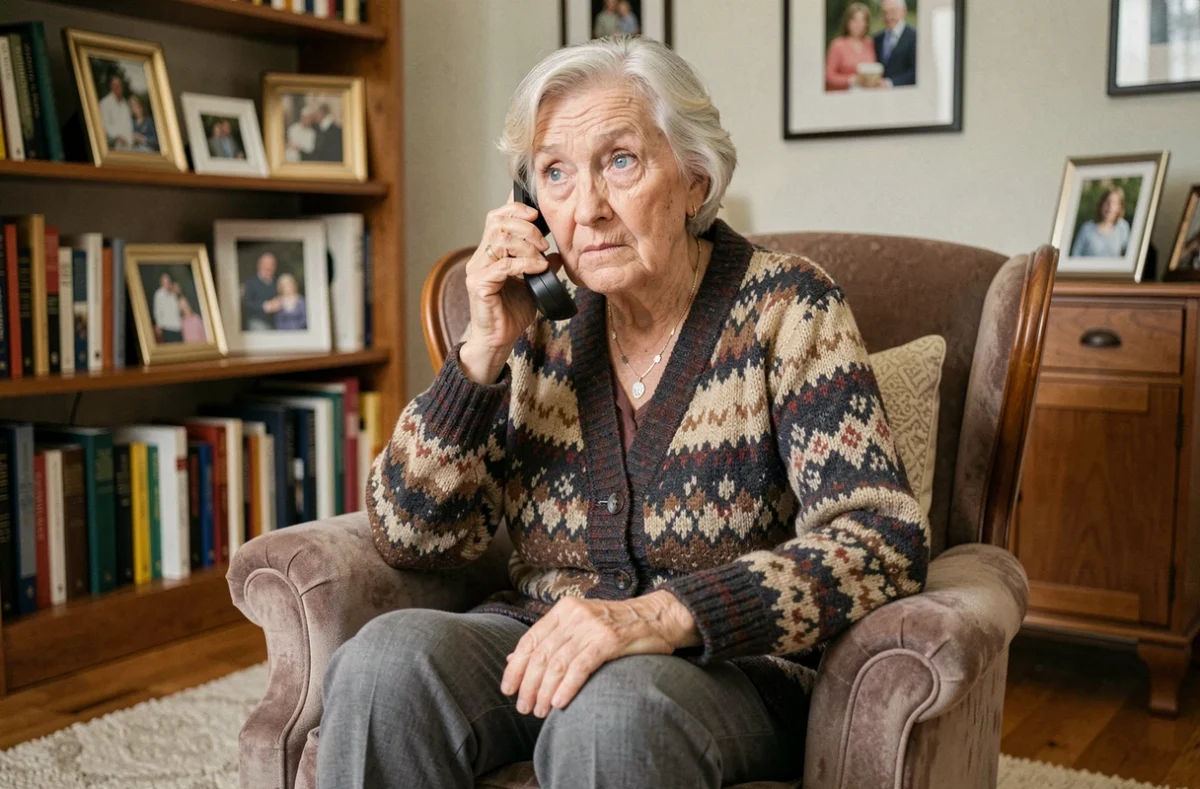
Dementia in our elders, a complex pathology, affects their cognitive ability, hindering memory, thought, and behavior. Through a psychological lens, the maternal call in seniors becomes an intriguing phenomenon. Often, the mother symbolizes safety and comfort; thus, the maternal plea can be interpreted as an attempt to return to those sensations. The link between dementia and maternal calling proves to be close: the mental confusion caused by dementia can evoke a need for grounding, of which the maternal image is a symbol. Demystifying dementia requires a deep understanding of these behaviors, paving the way for more nuanced support perspectives for our seniors.
Dementia in the Elderly: A Brief Explanation
Dementia in seniors is a disease that affects memory, behavior, and the ability to perform daily tasks. This condition progresses slowly and can have a devastating impact on the lives of elderly individuals as well as their caregivers. Dementia is not considered a normal part of the aging process, but age is the greatest risk factor for this disease.
There are several types of dementia, the most common being Alzheimer’s disease. It accounts for about 60 to 80% of cases, according to the Alzheimer’s Association. Other forms include vascular dementia following a stroke and less common variants like frontotemporal dementia or dementia with Lewy bodies.
As these conditions progress, they often affect the evoked maternal memories. Individuals affected may struggle to remember recent events but be able to recount in detail events that occurred long ago in their lives.
That said, aging • not being able to find one’s keys or forgetting the name of an acquaintance, for example • does not necessarily mean one suffers from any form of dementia.
Early diagnosis can help manage these symptoms.
The Phenomenon of Maternal Calling: A Psychological Analysis
The maternal cry possesses a primitive, brutal, and instinctive dimension that conveys strong and complex emotions. From a psychological perspective, it is fascinating to explore this sound manifestation from several angles to understand its implications.
The study of the maternal cry allows us to grasp the intensity of the bonds between mother and child. It is an instinctive signal intended to alert or protect the child from external threats. By delving into this subject, one discovers a complex system of non-verbal communication based on sound, rich in key information regarding the child’s well-being and fundamental needs.
Psychologists have found that each woman has her own unique way of crying out to her children, a style influenced by various factors such as her personal history, personality, and even her prior experiences with her own parents or guardians. This means that analyzing the maternal cry could provide valuable insights into the overall family dynamics as well as the deep nature of the mother-child bond.
Another interesting facet concerns the immediate impact of the maternal cry on the child. Research shows that toddlers respond instantly to their mother’s particular vocal timbre—further evidence that there is an innate understanding between them from their earliest moments together.
Finally, the evolutionary aspect should not be overlooked.
Correlation Between Dementia and Maternal Calling in Seniors
In the vast realm of medical research, the relationships between certain phenomena can sometimes seem surprising. Such is the case with the recently established link between dementia in seniors and maternal calling. This is both an intriguing and essential discovery that could open new therapeutic avenues for treating this debilitating disease.
Recent studies have shown that maternal calling has a significant impact on the brains of elderly individuals source. The presence of a mother, her physical contact, and her familiar voice soothe and comfort these individuals when faced with the cognitive difficulties related to their condition. The effect is so strong that it can even help delay the progression of dementia in some cases.
In fact, researchers have found that when dementia patients hear a maternal call—either directly from their own mother (if she is still alive) or through an audio recording—they show clear signs of cognitive improvement. They appear more alert, more focused, and less confused after hearing this affectionate call.
This suggests not only that maternal calling can help alleviate some symptoms of dementia but also that it could be used as a potentially effective therapeutic tool.
Demystifying Dementia: Insights and Future Perspectives
Cognitive degeneration, more commonly known as dementia, is a global concern affecting millions of individuals and their families. Long mystified by a lack of scientific knowledge and popular stereotypes, dementia is now better understood thanks to medical and technological advancements.
At the heart of the debate lies the crucial question: how can we improve the quality of life for those affected? Researchers have explored various avenues to address this pressing inquiry. Among them, the introduction of a diet rich in antioxidants has shown a significant reduction in the risk of developing certain types of dementia. Similarly, regular moderate physical activities have been proven beneficial in delaying the onset of symptoms.
Alongside these natural preventive measures, notable progress has been made in the pharmaceutical field. Several medications promising cognitive improvement in affected patients are currently in clinical trials. Although their long-term effectiveness remains to be confirmed, these developments undeniably mark a positive turning point toward optimized care.
And we must not overlook the constant growth of innovative technologies aimed at assisting individuals suffering from cognitive disorders on a daily basis. From mobile applications to connected residential devices, these tools significantly modernize the management of the disease in everyday life.